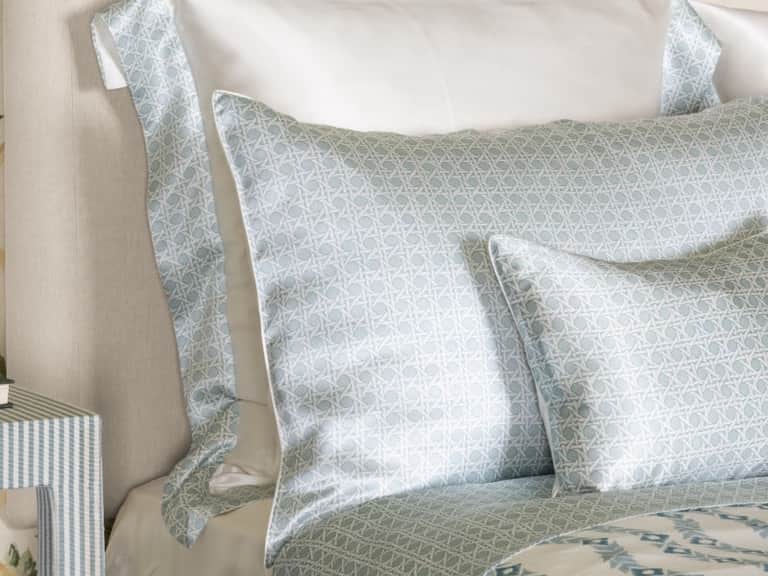
Rattan Blue Silk Oxford Pillowcase
Experience cool, breathable comfort with 100% mulberry silk—19 Momme satin-soft against skin, while the envelope closure keeps your pillow neatly in place for a tidy, luxurious night.
A nuanced, editorial exploration of two timeless bedding fibres, written in the measured, attentive cadence of a New Yorker feature. This piece threads history, texture, health, and the practicalities of care into a readable guide for UK readers navigating the linen closet of modern life.
Cotton and linen occupy adjacent but distinct real estate in the world of sheets. Cotton brings softness, versatility, and a familiar touch that adapts through a spectrum of weaves—from crisp percale to the more lustrous sateen. Linen, grown from flax, is celebrated for breathability, texture, and a narrative of sustainability that feels almost ceremonial in its simplicity. The question isn’t merely which is better; it’s which mood, climate, and routine you’re cultivating in your bedroom.
This piece approaches the comparison as a quiet dialogue between sensation and science: how each fabric feels at different temperatures, how moisture moves through the weave, and how both demand different kinds of care to keep them performing well across the year. We’ll also touch on the long arc of durability—how thread count and weave influence longevity, and what that means for a reader trying to balance cost with comfort and conscience.
Cotton sheets—especially those built from long-staple cotton—tend to feel soft, with a gravitational pull toward warmth or coolness depending on the weave. Percale, often described as crisp and breathable, traps air in its simple weave to promote a lighter night. Sateen, with a more satin-like drape, has a smoother face and a slightly warmer, enveloping sensation. In the UK climate, where cool damp mornings meet uncertain evenings, cotton offers a dependable baseline: a surface that feels familiar to many, and a fabric that readily adapts to a wide range of temperatures with minimal fuss.
Linen diverges in philosophy. Its fibres, derived from flax, breathe with a natural architecture that encourages air flow and rapid moisture transfer. Linen sheets are often “hard to love at first”—stiff, with a crisp texture—but they become softer and more characterful with time and laundering. Linen’s climate logic is straightforward: it cools in heat and retains warmth when the room chills, a natural thermostat that seems to understand the UK’s seasonal mood swings.
Care routines are not merely chores; they are acts of stewardship for the fabric that cradles our nights. Cotton sheets, especially those with higher thread counts, benefit from careful washing and a preventive approach to shrinkage. Wash in warm water with a mild detergent, avoid harsh whitening agents, and line-dry or tumble-dry on a low setting depending on the weave and finish. For those who favour cotton percale or sateen, a brief spin cycle with a gentle detergent—free of optical brighteners—helps maintain crispness and colour tones.
Linen, by contrast, welcomes a gentler handling: wash at cooler temperatures, avoid high heat that can accelerate wear, and consider line drying or using a low tumble-dry with quick removal to prevent excessive creasing. A plant-based softener can help maintain softness without compromising the fabric’s breathing capacity. Stone-washing or pre-washing linen is common in premium lines and often contributes to a softer, more "lived-in" hand before the first dozen cycles.
In a market that prizes immediate gratification, durability becomes a form of quiet resistance. Linen’s natural resilience—its ability to soften while retaining a stable fibre structure—means it can outlast many cotton options when cared for properly. Linen’s ecological story—less pesticide-intensive cultivation in some flax supply chains, global mills weaving in Portugal or Belgium or Belgium-linked linen labels—speaks to a growing consumer conscience. Cotton’s sustainability narrative is more dispersed, depending on farming practices, certifications (like GOTS for organic cotton), and the sourcing of long-staple fibres which often command a premium price but promise lasting comfort.
Cost is not simply price; it is the total cost of ownership. Linen’s upfront premium may translate into fewer replacements over a decade if maintained well. Cotton’s lower initial outlay can still deliver long-term comfort if you invest in a higher-quality weave that resists pilling and maintains a consistent hand.
For hot sleepers or humid climates, linen sheets can be your preferred summer ally. They wick moisture, dry quickly, and invite a cooler sleeping surface. For those in cooler seasons or with a preference for a soft touch from the moment you slip between the sheets, cotton percale offers a breathable yet crisp surface that remains comfortable through alternating day temperatures.
Seasonal rotation can be a practical strategy: keep a linen set for warmer months and a cotton set for cooler months, or invest in a versatile cotton sateen for winter nights when a touch more warmth feels right. The key is to understand your climate, your bed’s depth and mattress type, and your own sensitivities—especially skin sensitivity and allergies, where the weave and fibre choice can influence comfort.
Across the centuries, three figures illuminate the human fascination with textiles and sleep—each offering a different lens on fabric, craft, and daily life.
Silk holds a particular, almost nocturnal glamour. The Rattan Blue Silk Oxford Pillowcase, part of the Gingerlily collection, offers a vivid example of how luxury textiles can intersect with practical night-time needs. It is a 19 Momme silk pillowcase, designed with an envelope closure that keeps the pillow in place while delivering a cool, breathable surface touching skin and hair. Silk’s hypoallergenic properties and gentle manageability make it a standout for those who prize skin comfort and hair integrity as part of their sleep routine.
Material: 100% silk; 19 Momme weight. Construction: Oxford style pillowcase with envelope closure. Care: Machine wash delicate cycle at no more than 30 degrees; mild liquid silk detergent; air dry; cool iron; turn pillowcase inside out before washing.
Notes: This piece illustrates how a decorative, high-end accessory can be a functional complement to breathable, temperature-regulating fabrics like linen and cotton. Silk does not merely sit on the bed; it glides over the skin, offering a sensorial layer that adds to the overall mood of the sleep environment.
Product link: Rattan Blue Silk Oxford Pillowcase
The question of cotton versus linen is not a contest but a calibration. It invites readers to consider how a fabric’s texture, climate logic, and care demands nestle into personal rituals of sleep. Just as the day’s weather shapes what we wear, so do the bed linens shape how we sleep. A conscientious choice—one that respects the fabric’s history, its process, and its life after the wash—translates into nights that feel less like a routine and more like a restorative act. In the end, the bed is a stage for quiet resilience, a place where touch and temperature align with intention, and where the simple act of turning down the covers becomes a small, repeated affirmation of care.